
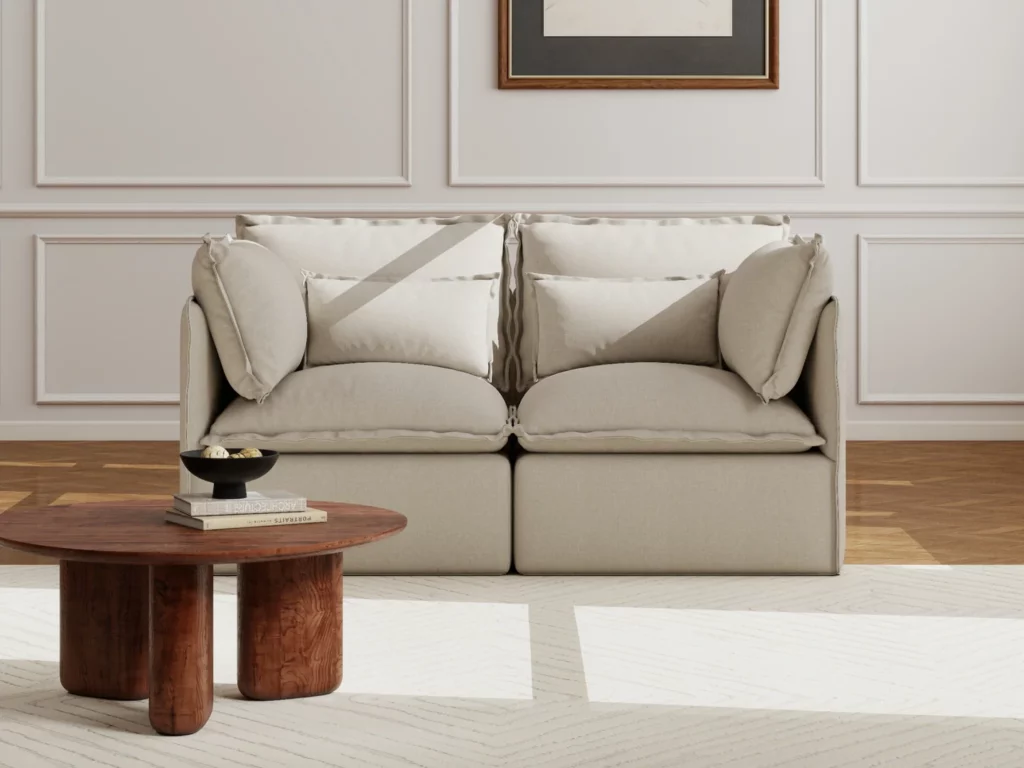
They are also one of the easiest upgrades to make without committing to a full redesign. A well-chosen two-seater brings comfort, style, and layout clarity in one move.
What makes a designer 2 seater sofa different?
A designer 2 seater sofas piece typically stands out through proportion, materials, and construction quality. It is not just “smaller seating” — it is often shaped to look balanced in compact rooms, with details that hold up visually at close range.
They also tend to offer better upholstery options, cleaner tailoring, and more refined silhouettes. In a small space, those differences are more noticeable because the sofa is always in view.
Who should choose a 2 seater instead of a 3 seater?
A two-seater is ideal when the room needs breathing space more than extra seats. If walkways feel tight, doors swing into furniture, or the layout forces awkward angles, a smaller sofa usually fixes more problems than it creates.
They are also a smart pick for couples, solo living, small apartments, studios, home offices, and reading corners. When guests are occasional, flexibility matters more than maximum capacity.
How do they make a small room look bigger?
A designer 2 seater can make a room feel larger by reducing visual weight and improving circulation. Slim arms, raised legs, and lighter fabrics help the sofa read as “open” instead of bulky.
They also make it easier to keep negative space around the main seating area, which is what actually creates the feeling of a bigger room. A sofa that leaves a clear path often does more than any decor trick.
What size counts as a true 2 seater?
Most 2 seaters land roughly between 140 cm and 190 cm wide, but the usable seating depends on arm width and cushion layout. A compact “apartment sofa” might sit at the lower end, while a generous two-seater can feel almost like a small three-seater.
They should measure their available wall space and keep at least 60–90 cm for main walkways. If the room is narrow, depth matters as much as width.
Which design features matter most in tight spaces?
The most helpful features are the ones that reduce bulk without sacrificing comfort. Tapered legs, narrow arms, and a higher seat can keep the profile neat and the room feeling open.
They should also consider back height. A lower back can make the room feel airy, while a higher back can feel cozy but visually heavier. If the sofa will sit under a window or art, a lower back often works better.
What fabrics and colours work best for small homes?
Lighter neutrals tend to make small rooms feel calmer and brighter, especially in spaces with limited natural light. Textures like boucle, linen blends, and tight weaves can add depth without adding visual clutter.
They can still go bold if the rest of the room is simple. A deep green, navy, or rust sofa can look striking in a small space, as long as nearby surfaces stay clean and the palette is controlled.
How can they style a 2 seater so it feels “designer”?
Styling starts with scale. A too-small rug, tiny cushions, or undersized art can make even a great sofa look lost. A larger rug that extends beyond the front legs helps the seating zone feel deliberate.
They can add one statement cushion, one textured cushion, and a throw, rather than piling on many. A slim side table and a floor lamp can finish the corner without crowding it.
Where should they place a 2 seater in a small layout?
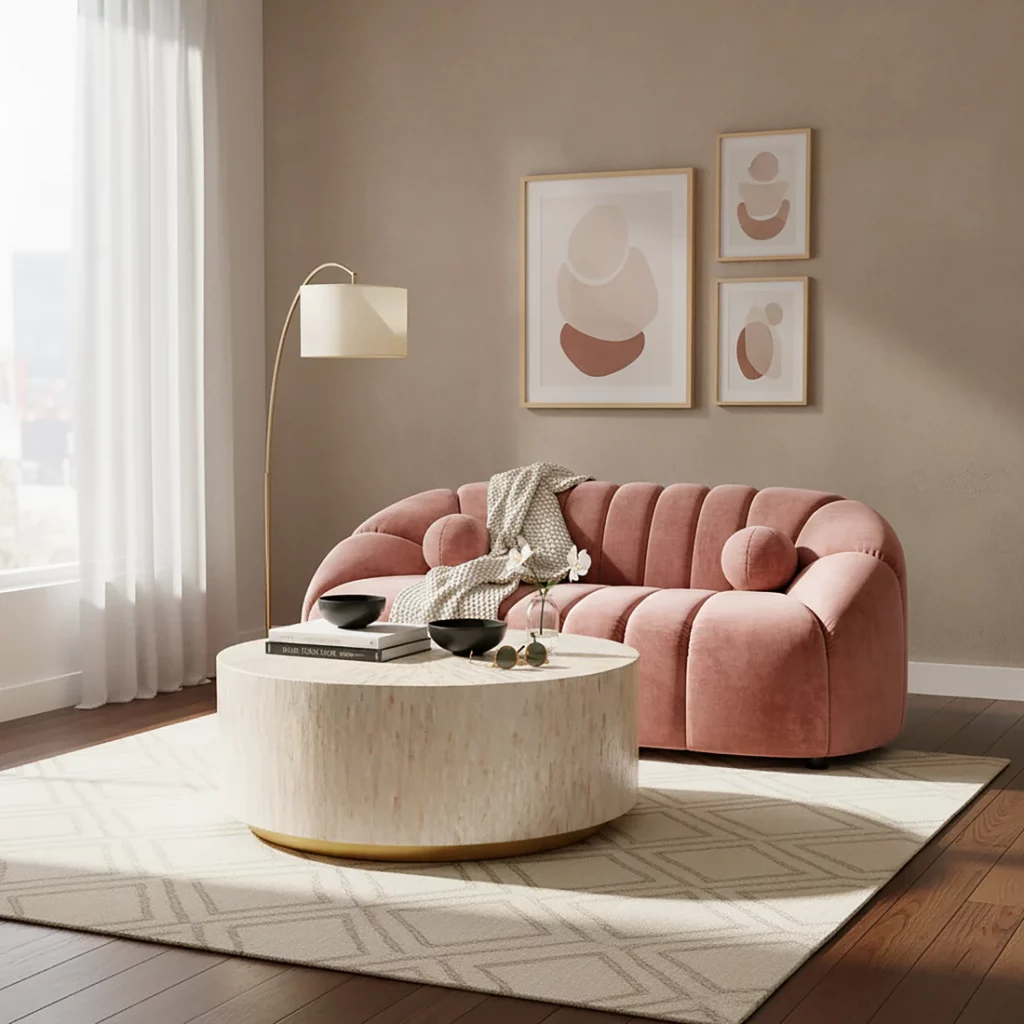
The simplest placement is against the longest wall, but it is not always the best. Floating a two-seater slightly off the wall can create a more premium look if space allows, especially with a narrow console behind it.
They should prioritise flow first. If placing it against a wall opens the room and keeps walkways clear, that is usually the right move. In studios, a 2 seater can also act as a soft divider between “living” and “sleeping” zones.
What are the most common buying mistakes to avoid?
The biggest mistake is choosing based on looks and ignoring measurements. Many sofas that seem compact online are deep and bulky in real life, which can shrink a room instantly.
They should also avoid overly low seats if they want everyday comfort, and overly delicate fabrics if the sofa will be used heavily. Another common miss is skipping swatches, which often leads to colour regret once lighting changes.
How should they choose the right one quickly?
They can narrow the choice by answering three things: the maximum width, the maximum depth, and the primary use. A sofa for lounging needs different proportions than one for upright seating or occasional guests.
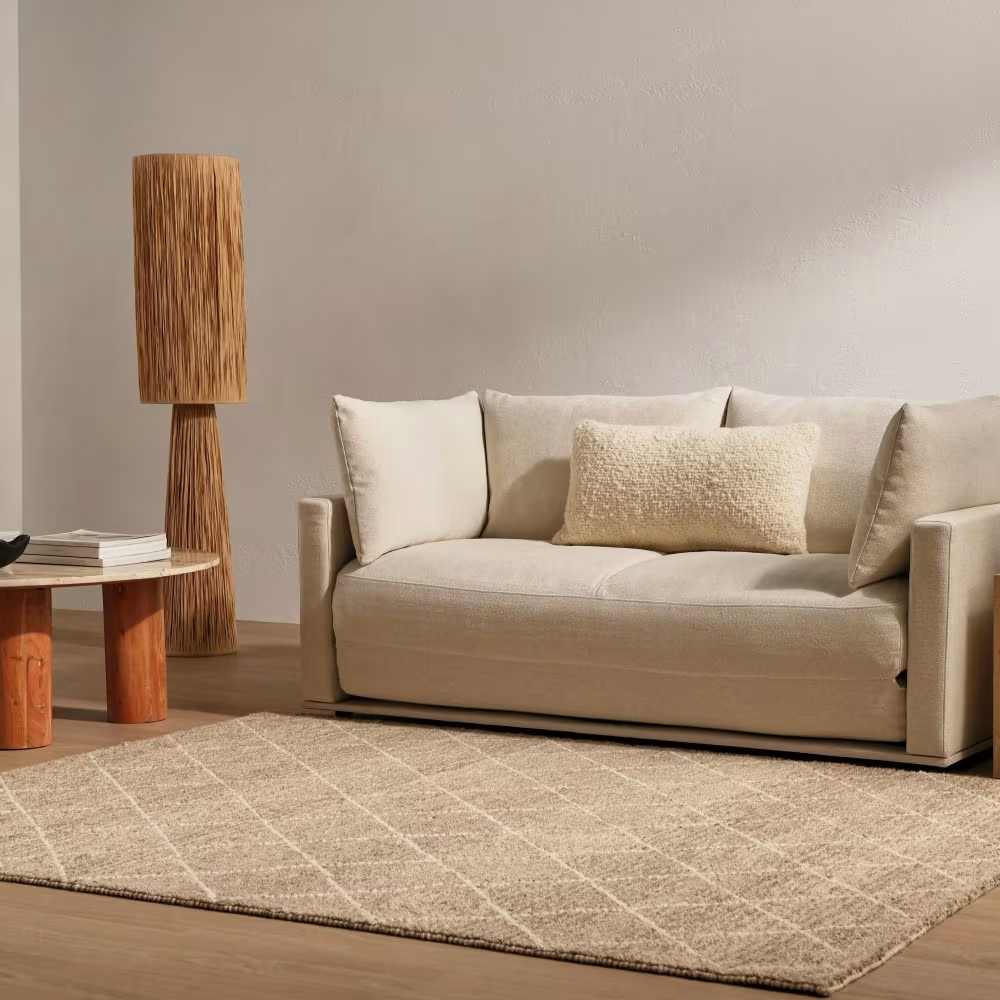
They should then pick one strong silhouette and one fabric direction, and stop there. In small spaces, a clear decision usually looks more “designer” than endless compromise. Learn more about chaise sofas Sydney: style meets everyday comfort.
FAQs (Frequently Asked Questions)
What makes a designer 2 seater sofa different from regular sofas?
A designer 2 seater sofa stands out through its balanced proportions, high-quality materials, and superior construction. It offers better upholstery options, cleaner tailoring, and refined silhouettes specifically shaped to suit compact rooms, making it visually appealing and functional in small spaces.
Who is best suited to choose a 2 seater sofa instead of a 3 seater?
A 2 seater sofa is ideal for those who prioritize breathing space over extra seating—such as couples, solo dwellers, small apartment or studio residents, home office users, and reading corners. It works well when walkways are tight or layouts are awkward, offering flexibility without overcrowding.
How does a designer 2 seater sofa make a small room appear larger?
By reducing visual weight through slim arms, raised legs, and lighter fabrics, a designer 2 seater sofa creates an open look rather than bulkiness. It also preserves negative space around seating areas and maintains clear pathways, which collectively enhance the sense of spaciousness in small rooms.
What size qualifies as a true 2 seater sofa for compact rooms?
True 2 seaters typically range between 140 cm and 190 cm in width. The usable seating depends on arm width and cushion layout. It’s important to measure available wall space and allow at least 60–90 cm for main walkways; depth is equally crucial in narrow rooms.
Which design features are most important for sofas in tight spaces?
Features that reduce bulk without compromising comfort are key—such as tapered legs, narrow arms, higher seats for a neat profile, and appropriate back height. Lower backs create an airy feel suitable under windows or art, while higher backs offer coziness but add visual weight.
What fabrics and colours work best for small homes when choosing a 2 seater sofa?
Lighter neutrals like boucle, linen blends, and tight weaves help small rooms feel calm and bright by adding texture without clutter. Bold colours such as deep green, navy, or rust can also work if the surrounding palette remains simple and clean to maintain balance.